Brass Handle Walking Sticks: Comparing Motifs, Finishes and Display
Compare brass-handle walking sticks by motif, surface, shaft material and how the handle will read in a retail or home display.
Compare decorative walking sticks by handle shape, shaft material, length, construction and intended display or mobility context.
A walking stick can be both a personal accessory and an expressive object. Handle form, shaft finish, length and construction shape how it feels in the hand and how it appears on display. For a wholesale assortment, those features give customers meaningful points of comparison; they should be described precisely and without suggesting that every decorative stick is a certified mobility aid.
Establish whether the item is being selected for display, costume, collecting or everyday support. A decorative handle or novelty motif does not establish ergonomic suitability, load capacity or medical certification. If a customer needs a mobility aid, direct them to verified product-specific weight limits and qualified advice rather than inferring suitability from the presence of a rubber tip.
For display and gifting, focus on the qualities a buyer can assess: handle motif, material wording, shaft carving, total length, detachable sections and base detail. Catalogue specifications are model-specific; compare the actual selected record, not a broad category label.
Handle shape sets the object’s first impression. A curved handle can feel classic and quiet; an animal head or nautical motif can make the stick more ornamental; a crystal or carved form may suit fantasy-themed merchandising. Shaft colour, grain and carved decoration add another layer. Pair a strong handle motif with a less busy background so it remains legible.
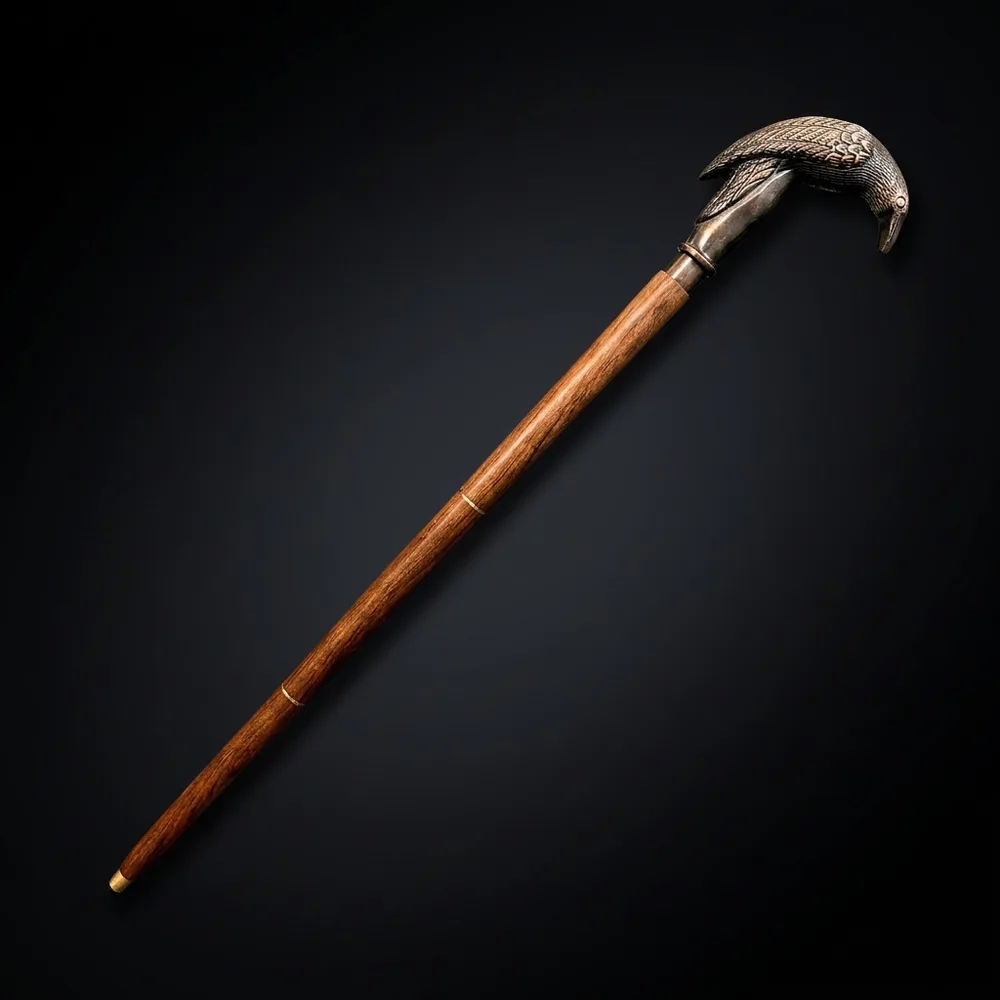
Three examples show different choices. StaveX 36.5 (stavex-37-0) is a 36-inch rosewood-and-brass stick with a brass raven handle and brass accents. StaveX 36.6 (stavex-37-1) is also listed at 36 inches and uses a polished brass cobra handle on a rosewood shaft. StaveX 36.4 (stavex-36-4) is a 36-inch wood walking cane with a hand-painted floral handle. These descriptions distinguish handle motif and listed material without assuming that every rosewood or painted model is finished alike.
| Selection point | What to inspect | Why it matters |
|---|---|---|
| Handle | Shape, material, grip area, edges and surface | Comfort and visual character are model-specific |
| Shaft | Material, grain, carving and joints | Determines appearance and how sections connect |
| Length | Overall assembled length and any adjustment | Affects display proportion and potential fit |
| Base | Tip material and condition | Relevant for display contact; not proof of medical safety |
| Construction | One-piece or detachable sections | Changes storage and assembly checks |
Several catalogue records describe a three-fold detachable build. Confirm which segments detach, how the joints reconnect and whether the assembled length is stated. Inspect the connection points before display or use. Keep loose pieces together in a labeled package and do not force a joint that does not seat smoothly.
If a stick is presented as a functional walking aid, seek explicit supplier information about intended user, load rating, fit and maintenance. A category description or generic rubber-tip statement is insufficient to establish safe support. Retail copy should state the specific use that the documentation supports.
Walking sticks can be displayed upright, in a rack or horizontally in a case. Upright presentation shows the handle shape clearly, but a stable rack is important to prevent slipping. Horizontal placement can emphasize shaft carving and colour while protecting protruding handles from contact. Group by motif, material or finish rather than mixing every style together.
For a retail wall or counter, show one example at eye level and label the exact handle and shaft materials. If the stick has a decorative motif, avoid implying it is an authentic historic artifact based only on its look. “Raven-handle rosewood walking stick” is a stronger and clearer caption than “antique walking stick” when it is a contemporary product.
Wood, brass, painted surfaces and other handle materials need different care. Follow the supplier’s model-specific instructions and avoid applying metal polish to wood or painted detail. The Canadian Conservation Institute provides general preventive-care guidance for metal objects; for a new mixed-material product, the supplier’s instructions should take priority. Handle the object by stable shaft sections when moving it and avoid using a decorative head as a lifting hook.
A balanced selection can include a classic handle, a motif-led option and a distinct surface treatment, provided each has a clear customer profile. Compare actual product lengths, material descriptions, number of photos and included features. Use current supplier records for commercial terms and availability; this article does not assume minimum quantities or delivery arrangements.
Before ordering, confirm dimensions, weight, joint construction, handle attachment, base specification and intended use. The best walking-stick range makes each model’s character easy to understand while keeping claims about support and safety tied to evidence.
Length is one of the most useful comparison points, but only when it is clear whether the figure refers to the assembled product. Several catalogue examples are specified at 36 inches. A three-fold format can make storage easier, yet the joint locations and connection method also matter for presentation and any use that the supplier explicitly supports. Confirm that each section locks or seats as intended, and do not use a damaged or loose joint.
When the customer’s purpose is mobility, stick height must suit the individual and use case. Do not prescribe a fit from a product photo or a generic length label. Refer the buyer to qualified advice and obtain the manufacturer’s stated intended use and limits. Display merchandising should keep decorative appeal separate from medical or safety claims.
A compact assortment can be organized around customer questions: classic or expressive handle; light or dark shaft; smooth or carved surface; fixed or detachable construction. Make each difference visible on a shelf card. If several sticks share a length and joint format, emphasize the model-specific handle and materials so the range does not become a row of interchangeable novelty objects.
Check the photographs before choosing models. The handle should be shown from several directions, and any carved shaft should be visible at enough resolution to judge its pattern. A close-up can communicate detail, but retain a full-length image so the shopper can understand proportion. Use the product reference on internal notes to prevent materials or handle descriptions from being mixed between similar listings.
An upright rack should support the shaft without compressing decorative surfaces. Place heavier or more sculptural handles where customers can view them without pulling on the sticks. In a case, leave room between adjacent handles so metal details do not knock against each other. Keep labels within reach and do not arrange the objects so a visitor needs to lift one to read another.
If the range is displayed in a home or hospitality interior, consider a wall-mounted rack only after checking how each stick is retained. Do not rely on a single decorative hook unless the supplier or installer confirms it is appropriate. These practical display choices reinforce that the products are intentional accessories while keeping use claims appropriately specific.
A full-length photograph communicates proportion; a separate close-up shows the handle, shaft carving and joint. Keep the background simple and include a second angle when a handle shape is difficult to recognize from the front. Product images support merchandising, but the written listing should remain the authority for material and construction. Do not infer solid brass from a brass-coloured surface or infer wood species from grain alone.
For online wholesale selection, maintain a comparison sheet with the product reference, exact title, listed materials, length, handle type and construction. This prevents a motif from one model being combined with another model’s shaft or base description. A short, carefully maintained sheet is especially useful when several variations share the same overall length.
Catalogue reference: StaveX 36.5. Listed material: Rosewood & Brass.
Check the current product page and ask for model-specific dimensions, packaging and suitability before ordering.
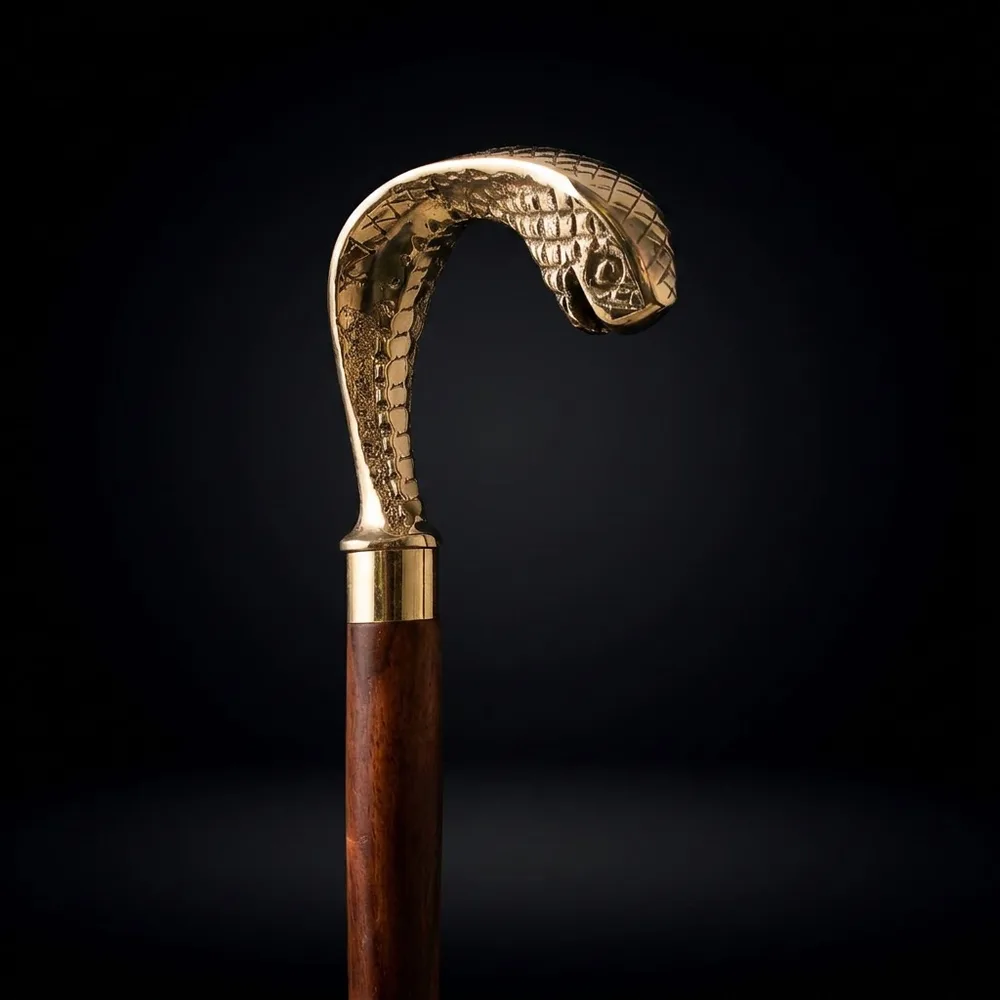
Catalogue reference: StaveX 36.6. Listed material: Rosewood & Brass.
Check the current product page and ask for model-specific dimensions, packaging and suitability before ordering.
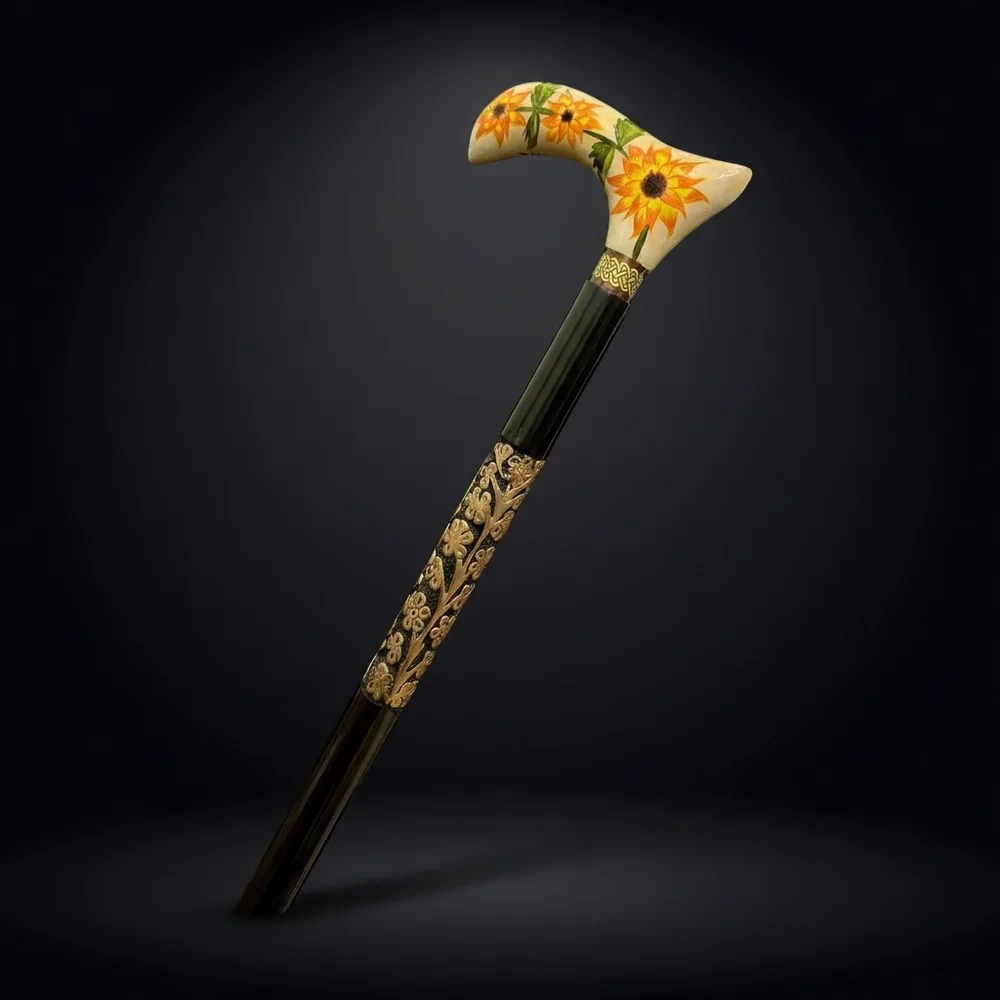
Catalogue reference: StaveX 36.4. Listed material: Wood.
Check the current product page and ask for model-specific dimensions, packaging and suitability before ordering.
Explore Antiqula’s walking sticks catalogue
Catalogue examples were checked against Antiqula’s product records on 2026-10-02. Research sources provide context; they do not certify the performance of individual catalogue products.