Historical vs Fantasy Helmet Designs: How to Describe a Replica
Use observable features and careful wording to distinguish historically inspired helmet forms from fantasy styling.
Compare helmet forms, finishes, supports and display scale while keeping historical replicas distinct from fantasy designs.
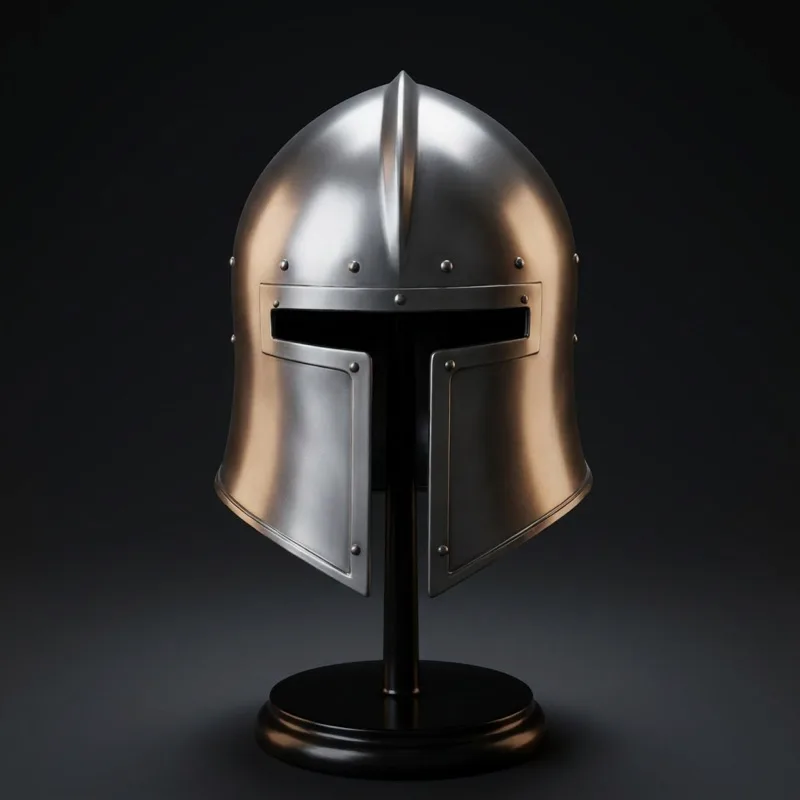
An armor helmet has a compact outline but a surprisingly strong effect on a display. The opening, visor, crest, surface and support determine whether it reads as a historical reference, a costume piece or a fantasy design. For a useful selection, begin with the role of the object and then compare its actual size, materials, included stand and handling requirements.
A contemporary replica is not a surviving antique and should not be described as one. Nor should a decorative or costume helmet be presented as certified protective equipment. Product wording can identify an inspiration or style; it does not prove a particular maker, date or historical use.
Historical helmet types have distinct forms, but similar silhouettes can appear across different places and periods. A barbuta or barbute is an open-faced helmet form; a sallet may also have an open face or a visor, and museum examples are individually catalogued with specific dates and origins. The Metropolitan Museum’s Italian sallet record, for example, describes a Milanese object dated about 1470–80 and notes that a tall form is sometimes called a barbute. That specificity comes from research on that museum object, not from a resemblance alone.
A product title may use terms such as Gothic, Crusader, Templar or Renaissance as style cues. Treat those as merchandising language unless the supplier documents a direct historical model. Winged crests, plumes, dramatic black surfaces and mixed motifs can move a design toward theatrical or fantasy styling even when the underlying silhouette references historic armor.
Look at the opening from the front, the profile, the rear and any moving visor or attached detail. A full-face opening creates a different character from an open-faced form. A crest or plume can add height and make the displayed outline more dramatic; chain detail can alter the visual texture and weight distribution.
The catalogue includes CrestX 11.0 (crestx-11-0), a steel barbuta helmet listed at 11 inches high with a wooden stand included. CrestX 12.0 (crestx-12-0) is a steel Gothic sallet with bevor and visor, listed at 12 inches. CrestX 12.2 (crestx-12-2) is listed as a steel/brass Gothic sallet with an open visor and horsehair plume. These descriptions provide a practical comparison of shape and included details. They do not establish that each piece reproduces a museum object or is suitable for protection.
| Display goal | Features to compare | Space to measure |
|---|---|---|
| Compact shelf object | Overall height, base inclusion, front opening | Shelf depth and clearance above |
| Focal-point helmet | Crest, plume, visor silhouette | Height including highest detail |
| Costume or reenactment context | Fit, interior padding, movement and supplier use guidance | Wearer dimensions and safe visibility |
| Retail grouping | Finish contrast and shape variation | Spacing so profiles remain distinct |
A stand changes the object’s height and how it is viewed. Verify whether it is included for the exact reference, whether the helmet rests on it or attaches to it, and whether its footprint is appropriate for the shelf. A stand shown in one product’s photos is not evidence that another model includes the same accessory.
For a wall or case display, use a support designed for the object’s weight and contact points. Avoid loading delicate edges or moving details. If visitors can approach closely, place the helmet so protrusions do not create a contact hazard and avoid inviting people to lift it by a visor or crest.
Use the product record’s material wording and finish description. Steel, steel with brass finish details, and steel with chainmail components are materially different claims. A warm gold colour alone does not mean solid brass. Ask for clarification when a title, photograph and specification seem inconsistent.
Metal surfaces can collect fingerprints and may be vulnerable to corrosion. The Canadian Conservation Institute’s general care guidance recommends managing handling and environmental risks for metal collections. For a newly made replica, follow the supplier’s finish-specific instructions first. Avoid routine abrasive polishing, which can change a surface and remove detail; never assume a dark, plated or deliberately aged finish should be polished to bright metal.
A concise label can say “contemporary steel replica in a barbuta-inspired form” or “decorative sallet-style helmet with visor.” Add a historical date or region only when the model’s connection to a documented source is supported. Explain fantasy elements plainly if they are part of the design. This clarity helps buyers and visitors enjoy the form without being asked to accept unsupported provenance.
Before shortlisting, note the intended use: protected display, costume use or a retail prop. Record the available height and depth, whether the stand is included, model weight, any moving parts and how the piece should be handled. For wearable use, obtain explicit supplier guidance on fit, visibility, ventilation and use context. The words wearable or steel do not certify protection.
A considered helmet selection balances recognizable form with accurate interpretation. Confirm the individual model’s construction, support and dimensions, then give it enough space for the silhouette to read clearly.
A useful product image set should let the buyer inspect the helmet from front, side and rear, including the stand and any detachable decoration. Compare the eye opening and lower edge, then check whether the visor is shown open and closed. A plume can dominate the silhouette from the side while appearing small in a frontal photograph. If the room has a strict height limit, request the height with all decorative parts fitted.
For a group display, place paper outlines of the selected widths on a shelf before ordering. That simple test shows whether two similar forms will merge into one dark mass or whether their openings and crests remain distinguishable. Choose a background that separates the edge from the wall; dark steel against a dark wall can erase useful detail.
A static display prioritizes stability, support and visibility. A costume selection raises different questions: interior dimensions, head movement, sightline, fastening and the supplier’s intended-use statement. Do not assume a model described as wearable has been tested for impact or extended use. Ask whether the visor moves and how it is secured before allowing anyone to handle it.
Collectors may care about reproducing a documented type, while a hospitality display may prioritize a strong, readable silhouette. Keep those goals separate in the brief. For a historically oriented exhibit, record the museum comparison and explain the limits of the resemblance. For a themed interior, identify the piece as inspired by a period or style and avoid attaching a specific provenance claim.
Before delivery, confirm package dimensions, unpacking orientation and the surface on which components can be laid out. Keep small fittings and removable details in a labeled container. Photograph the assembled display and retain the care notes so staff can restore its position after routine cleaning. If an item will be stored between seasons, support it so its weight does not rest on a thin edge or on a movable visor.
Routine attention to these practical details helps preserve both the object and its interpretation. A clearly measured, securely supported replica can be presented confidently without overstating what its type name or finish proves.
Catalogue reference: CrestX 001. Listed material: Steel.
Check the current product page and ask for model-specific dimensions, packaging and suitability before ordering.
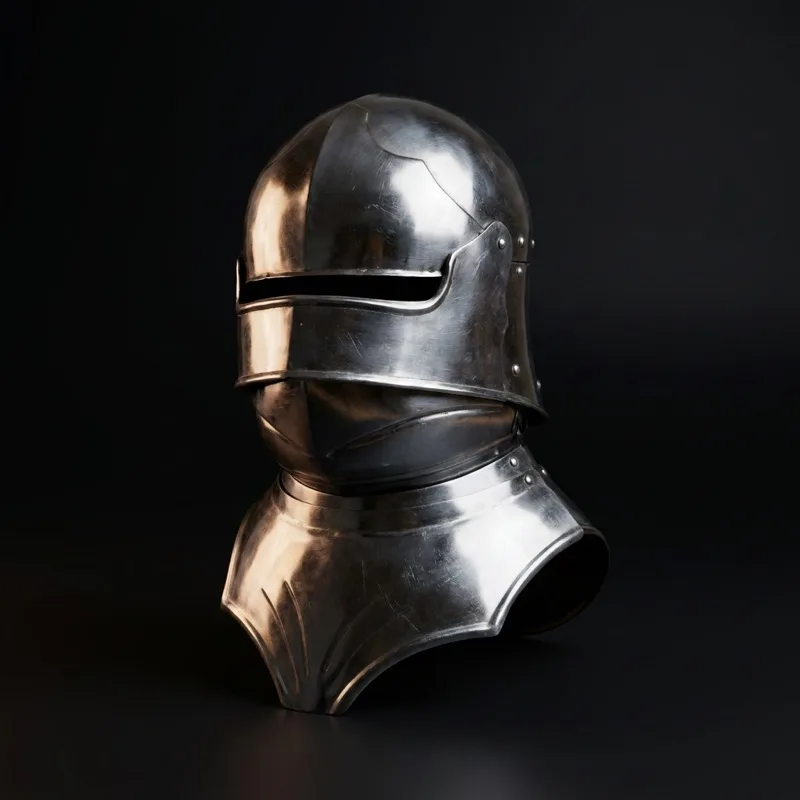
Catalogue reference: CrestX 012. Listed material: Steel.
Check the current product page and ask for model-specific dimensions, packaging and suitability before ordering.
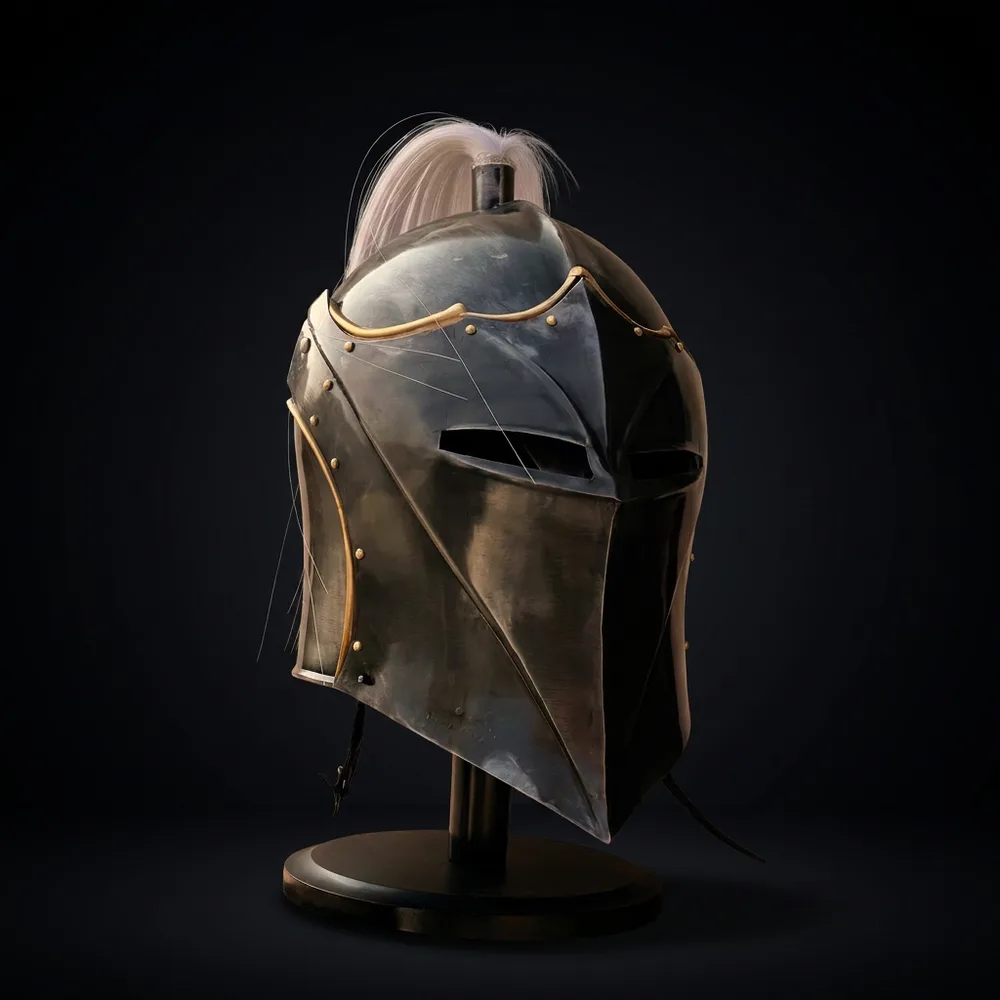
Catalogue reference: CrestX 014. Listed material: Steel/Brass.
Check the current product page and ask for model-specific dimensions, packaging and suitability before ordering.
Explore Antiqula’s armor helmets catalogue
Catalogue examples were checked against Antiqula’s product records on 2026-10-02. Research sources provide context; they do not certify the performance of individual catalogue products.