Viking and Crusader Shield Styles for Wall Displays
Compare Norse-inspired and Crusader-themed shield designs by outline, motif, colour and the space needed for safe wall display.
Choose a decorative shield by size, shape, surface, wall support and the visual role it will play in a room.
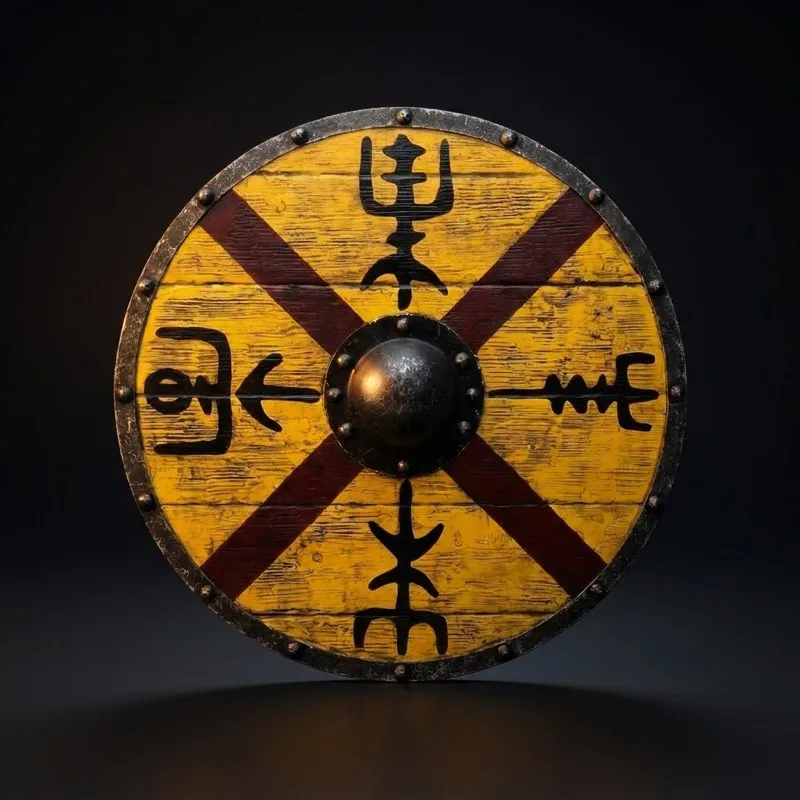
A shield is a broad, graphic object: its outline and central motif can anchor a wall, but the same features make size and mounting especially important. Before choosing one, decide whether the goal is a historical interpretation, a themed interior, a retail display or a costume prop. Then compare diameter, materials, painted or carved decoration, boss details and the support required.
Many contemporary decorative shields use historic or fantasy language. A Viking-style or Crusader-style title describes a design cue unless the maker documents a precise source. Treat these pieces as reproductions or decorative objects, not as antiques or certified protective equipment.
Begin with the wall area and the position from which people will see the shield. A larger round form can read across a room or in a shop window. Smaller pieces can work in a grouped composition, provided their motifs do not compete. Sketch the actual diameter on paper or mark it with removable tape; a shield can occupy more visual space than a framed picture of the same width because its edge and boss project from the wall.
The catalogue provides concrete size examples. OdinX 24.1 (odinx-24-1), a Viking-style shield described with wood and steel, is specified at 24 inches in diameter. OdinX 24.3 (odinx-24-3), a blue-and-white dragon design with steel boss, is also 24 inches and lists wood and steel. OdinX 24.4 (odinx-24-4) is a golden dragon design with hand-painted wall décor and is specified at 28 inches, with wood listed as material. These details are model-specific; do not assume every shield has metal fittings or the same decoration technique.
| Display plan | Selection questions | Installation detail |
|---|---|---|
| Single focal shield | Which motif and colour lead the room? | Diameter, projection and attachment points |
| Small group | Do sizes and palettes relate without merging? | Spacing and weight on each fixing |
| Shop feature wall | Is the design legible from the entrance? | Visitor reach, edge clearance and secure fixing |
| Themed room | Is the historical or fantasy language consistent? | Wall substrate and maintenance access |
Wood and wood with steel are distinct catalogue descriptions. A central metal boss, rim or painted surface may change how the piece looks and how it should be supported. Use the individual record’s material wording rather than transferring claims from a neighboring listing. Inspect front, rear and edge photographs when planning a wall mount, since a front image may not show fixing points or the back construction.
Motifs also communicate different moods. Norse knotwork, ravens or animal forms suggest one visual vocabulary; dragon imagery and bright contrasting fields can read more theatrical. These are broad interpretive cues, not proof that an object reflects a particular archaeological find or battle. For educational displays, pair a decorative piece with a short, sourced label distinguishing historical context from modern design.
A shield’s weight, rear fittings and wall material determine how it should be installed. Request the exact weight and mounting method if they are not listed. Use a fixing suitable for the wall substrate and the object’s load, and ask a qualified installer when needed. Never rely on a nail chosen by eye or a product photograph as proof of the recommended support. In public areas, assess the risk of impact, tampering and falling objects.
If the shield is displayed leaning rather than mounted, use a stable support and protect the lower edge from sliding. Keep it away from doors, narrow routes and seating where an edge could catch clothing or bags. A display shield is not intended to be picked up, worn or used to block impact unless explicit product documentation supports that use.
Painted decoration can flatten under direct glare. Try a neutral, low-reflection wall and view the shield from the room entrance. If it sits among maps, framed art or other props, give the central motif breathing room. A pair or trio works best when scale and colour have a clear order rather than equal visual emphasis everywhere.
For a retail assortment, a cohesive theme does not require identical designs. One wood-and-steel round shield and a larger hand-painted wood example can show meaningful variation in material and presentation. Use product cards for exact dimensions and construction rather than relying on generic wall-display descriptions.
Use dry, gentle dusting unless the supplier recommends another method. Avoid wet cleaning, oils or abrasive polish on painted areas and mixed materials without product-specific advice. Metal fittings can be vulnerable to corrosion; the Canadian Conservation Institute’s metal-care guidance offers general preventive-care principles for collections, while the supplier should guide care of a contemporary finish.
A caption such as “contemporary Norse-inspired wooden shield with steel boss” describes a design and stated material. Avoid “authentic Viking shield” unless the object is a documented artifact with provenance. Royal Armouries’ account of medieval warfare notes that historical shields used particular construction and fittings, including grips or arm straps. A decorative wall piece’s front motif alone cannot establish those historic functional details.
Record the intended wall, visible diameter, materials and finish, rear fixing information, weight, mounting plan and caption. For a public venue, include installer review and a plan for routine inspection. For a shop, note viewing distance and whether the piece will be displayed flat, on a stand or as part of a group.
A shield works best when it is scaled to the wall, secured appropriately and described at the level the evidence supports. The outline may be dramatic; a measured installation and clear caption make it a considered display.
Front photography is best for comparing motifs, but a rear view answers installation questions. Look for hanging hardware, reinforcement and contact points; if those are not documented, request them. A circular shield can hang at a slight angle if its support is off-centre, which may change how a central boss or painted emblem reads. Confirm the intended orientation and keep the object clear of heat sources, damp walls and direct handling.
For a coordinated wall, decide whether the grouping is organized by subject, palette or size. A consistent palette can unite several different motifs, while a single large shield surrounded by smaller pieces creates a clear hierarchy. Use paper templates to settle spacing before drilling. This is especially helpful when the wall contains other frames or sconces, because the shield’s raised details may cast shadows beyond the flat outline.
Create a brief care note for whoever handles the display. Dust the face and edge gently, avoid household cleaners on painted decoration and check the wall fixing during routine inspections. Mixed materials make a single generic cleaning product a poor choice. Record any supplier advice with the product reference so the correct instructions remain with the object if it moves between rooms.
Catalogue reference: OdinX 24.1. Listed material: Wood & Steel.
Check the current product page and ask for model-specific dimensions, packaging and suitability before ordering.
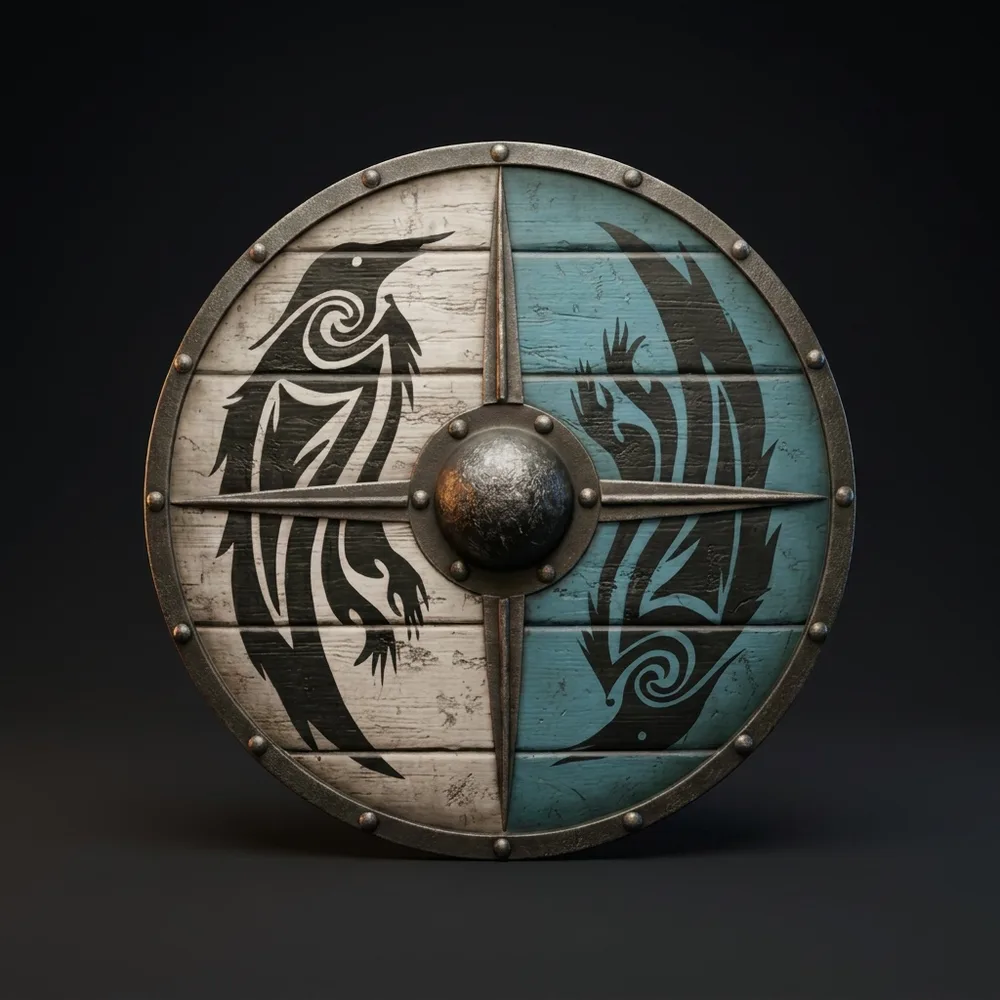
Catalogue reference: OdinX 24.3. Listed material: Wood & Steel.
Check the current product page and ask for model-specific dimensions, packaging and suitability before ordering.

Catalogue reference: OdinX 28.2. Listed material: Wood.
Check the current product page and ask for model-specific dimensions, packaging and suitability before ordering.
Explore Antiqula’s armor shields catalogue
Catalogue examples were checked against Antiqula’s product records on 2026-10-02. Research sources provide context; they do not certify the performance of individual catalogue products.