Armor Shields: Selection, Uses and Display Guide
Choose a decorative shield by size, shape, surface, wall support and the visual role it will play in a room.
Compare Norse-inspired and Crusader-themed shield designs by outline, motif, colour and the space needed for safe wall display.
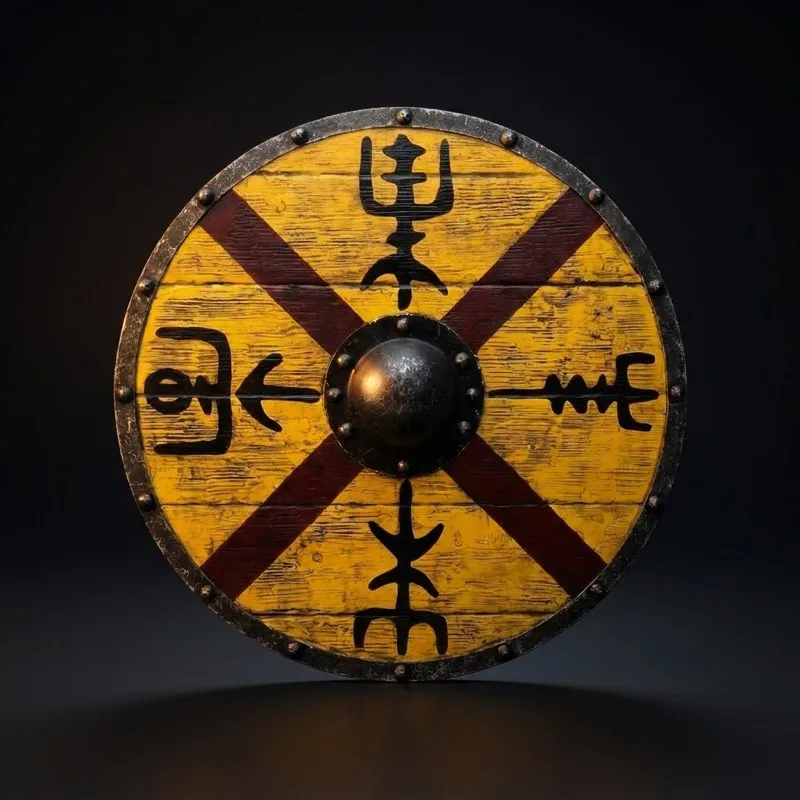
A shield chosen for a wall is seen first as a shape and a field of colour. Norse-inspired designs often use animal, knotwork or runic-looking elements, while Crusader-themed pieces may lean on crosses, heraldic composition or a bold central emblem. Those descriptions refer to modern visual language; a shield’s title or motif alone does not establish that it reproduces a historic artifact.
The best selection begins with the room. Decide whether the shield should dominate a wall, complement a larger themed display or introduce a motif in a shop window. Then compare diameter, surface treatment, material and installation needs.
A battleworn Norse-style design can create a textured, subdued focal point. A blue-and-white dragon can feel more graphic and theatrical. A golden dragon with hand-painted wall decoration introduces a warmer, brighter surface. These visual differences affect how the shield sits with wood furniture, stone textures, dark paint or bright retail lighting.
The catalogue makes the variations tangible. OdinX 24.1 (odinx-24-1) is listed as a 24-inch wood-and-steel Viking shield with a battleworn Norse style. OdinX 24.3 (odinx-24-3) is also 24 inches, described with a blue-and-white dragon and steel boss, with wood and steel listed. OdinX 24.4 (odinx-24-4) is a 28-inch golden dragon design; its material is listed as wood. The wider 28-inch diameter changes the display footprint as well as the visual weight.
| Question | Norse-inspired look | Crusader or heraldic look |
|---|---|---|
| What reads first? | Animal, knotwork or weathered surface | Central emblem, cross-like geometry or colour blocking |
| What room can it suit? | Rustic, maritime or folklore-led themes | Medieval, heraldic or ceremonial themes |
| What should be verified? | Actual carving, paint and material | Exact motif, material and rear mount |
| What should the caption avoid? | Claiming a named Viking owner or find | Claiming a specific order, battle or date |
A raven, dragon, cross or weathered finish may suggest a theme, but it cannot identify a maker, date or historical owner. If an educational installation needs historical accuracy, use a museum or scholarly source to establish the relevant context and label the replica as a modern interpretation. Royal Armouries’ overview of the Hundred Years’ War discusses period armor and shield construction; it is useful context, but it cannot verify an unrelated decorative shield’s provenance.
Use language such as “Norse-inspired wall display” or “Crusader-themed decorative shield.” If a supplier gives more precise design documentation, preserve that attribution and avoid expanding it beyond what the documentation says.
Mark the actual diameter and allow room for the projection of a raised boss or rim. Request the rear view, weight and mounting details for the selected model. Use a fixing matched to the wall substrate and get installer advice for heavy pieces or public spaces. The catalogue front image does not reveal how the shield is supported at the back.
When arranging several shields, vary scale deliberately. A 28-inch design can serve as the anchor, with smaller objects set far enough apart that each motif stays visible. In a retail display, position the center near a comfortable viewing level and keep edges away from doors, shelves and customer traffic. A wall display is not an invitation to handle or wear the item.
A concise caption can name the product’s stated material, diameter and decorative theme. For example: “Contemporary 24-inch wood-and-steel shield with Norse-inspired battleworn finish.” Keep words like authentic, antique and historically accurate for cases where provenance or direct replication is documented. This distinction lets a dramatic design remain attractive without misleading the viewer.
A strong display connects motif, room and scale. When the wall fixing is appropriate and the wording is exact, Norse-inspired and Crusader-themed shields can contribute character while remaining clearly understood as decorative reproductions.
Catalogue reference: OdinX 24.1. Listed material: Wood & Steel.
Check the current product page and ask for model-specific dimensions, packaging and suitability before ordering.
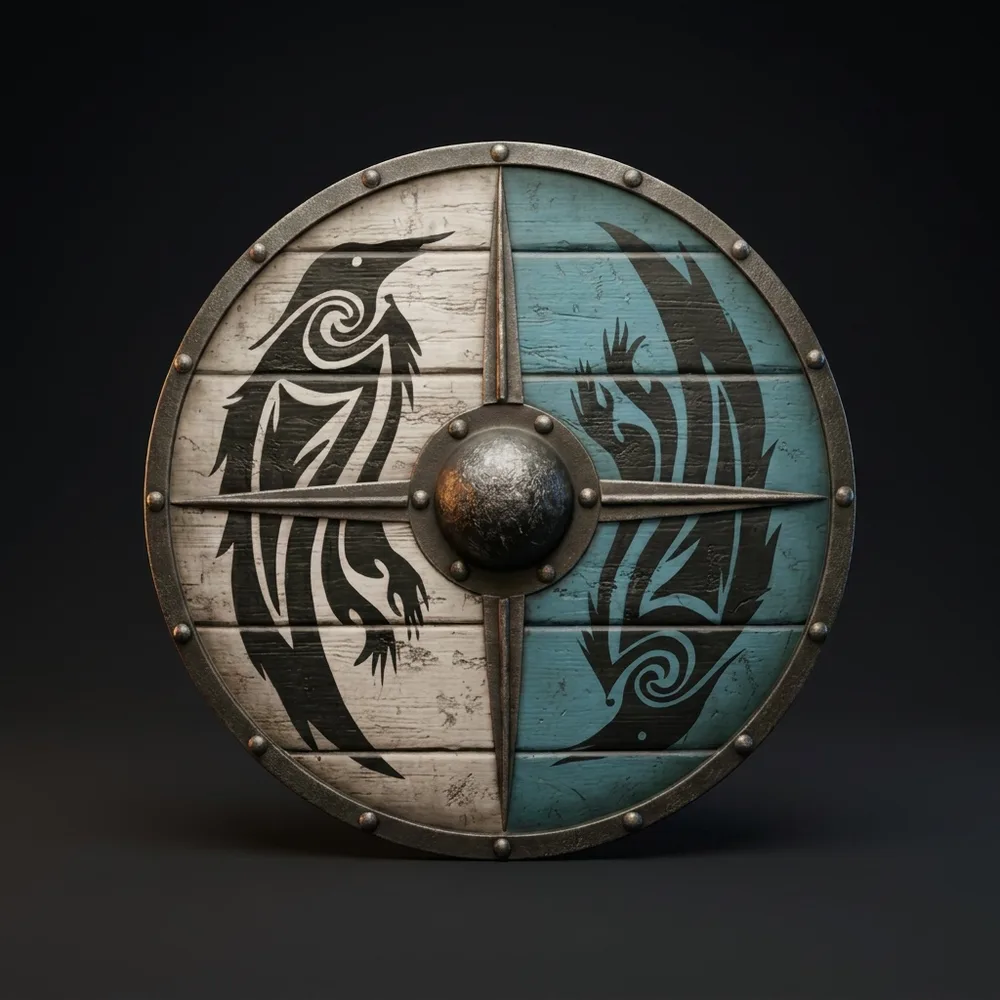
Catalogue reference: OdinX 24.3. Listed material: Wood & Steel.
Check the current product page and ask for model-specific dimensions, packaging and suitability before ordering.
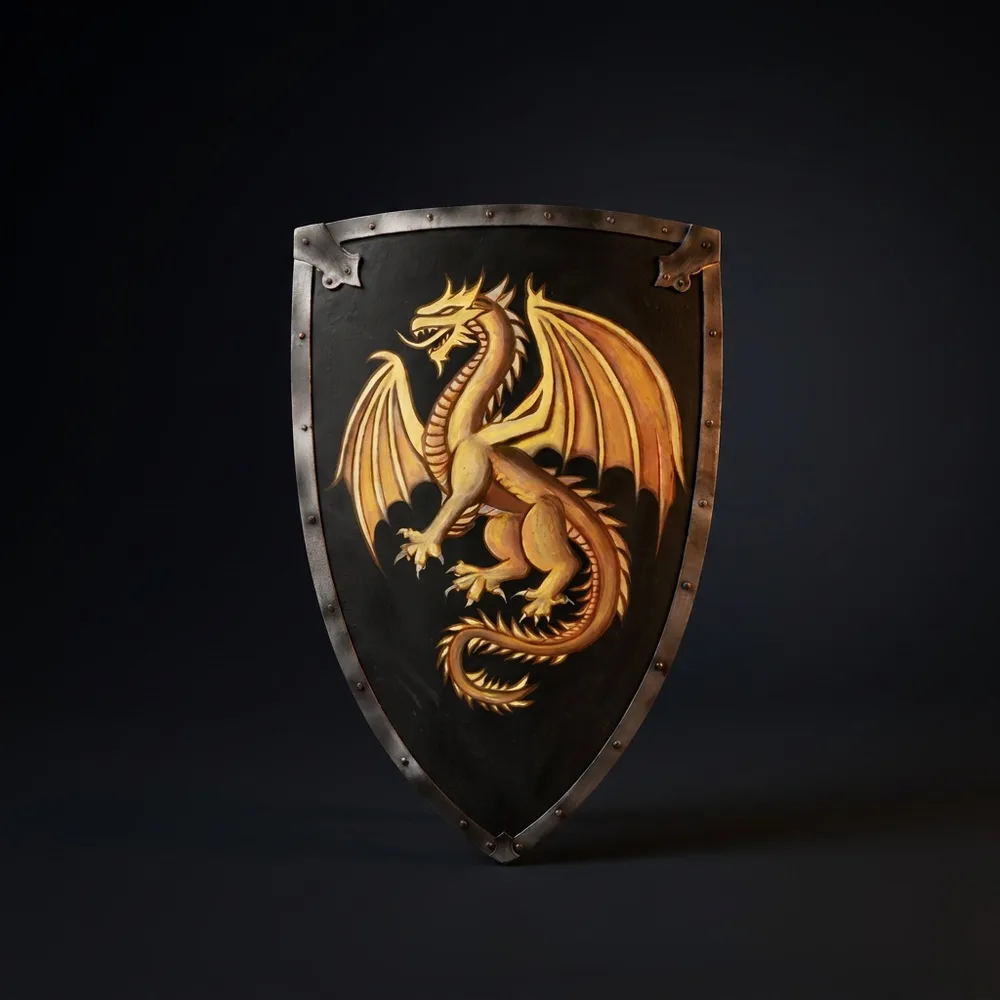
Catalogue reference: OdinX 28.2. Listed material: Wood.
Check the current product page and ask for model-specific dimensions, packaging and suitability before ordering.
Explore Antiqula’s armor shields catalogue
Catalogue examples were checked against Antiqula’s product records on 2026-10-02. Research sources provide context; they do not certify the performance of individual catalogue products.