Full Armor Suit vs Torso Display: Space, Stand and Handling
Compare a full armor silhouette with a torso-led display by measuring height, footprint, support points and assembly access.
Plan a full armor display around verified components, overall space, support, handling and a clear distinction between costume and protection.
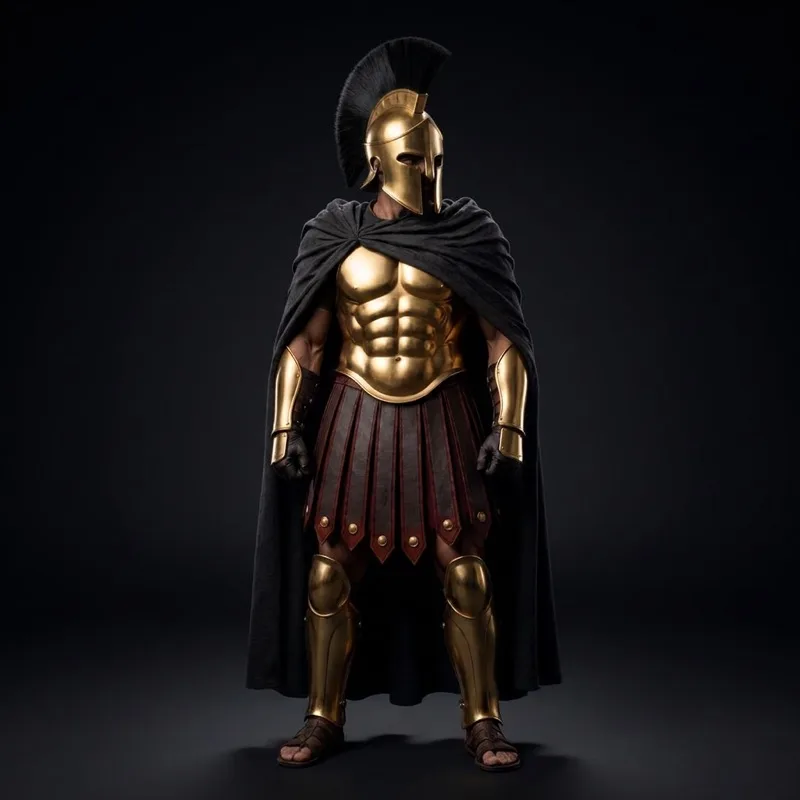
Armor has an unusual presence in a room because it suggests a human figure even when nobody is wearing it. A complete suit can become the focal point of a lobby, themed interior or collection, but “full suit” does not always mean the same components, fit or support. A careful selection begins with a checklist of included pieces and ends with a plan for assembly, display and safe access.
Contemporary armor products may be designed for costume, display, reenactment or a combination stated by the supplier. Steel construction and historical styling do not certify protective performance. Do not advertise a decorative suit as combat-ready or protective without applicable evidence.
Decide whether the intended impression calls for a complete figure, a torso-centered arrangement or a smaller group of related pieces. Confirm the exact items included in the model: helmet, cuirass, arm and leg defenses, chainmail, straps, stand or other support. Product titles can use “full set” while specifications enumerate different components, so the itemized model record should guide the brief.
For example, VaultX 5.5.1 (vaultx-5-5-1) is described as a Spartan full set with steel and brass, a brass finish and standard adult fit. VaultX 5.5.4 (vaultx-5-5-4) is listed as a female-cut steel and chainmail suit for LARP or Ren Faire use. VaultX 6.0.0 (vaultx-6-0-0) is described as a steel barbuta full suit with Crusader styling for wearable, display or cosplay contexts. These are materially and stylistically different records; verify included components and fit details from the individual listing before planning a display.
| Display format | Main visual effect | Planning questions |
|---|---|---|
| Full figure | Complete silhouette and strong focal point | Total height, stand, footprint, assembly and weight |
| Torso or partial set | Focus on plate shape and surface | Which parts are included and how edges are supported |
| Costume presentation | Shows fit and relationships between pieces | Size guidance, moving parts, visibility and intended use |
| Retail feature | Communicates the range quickly | Secure stand, access, caption and sightline |
A historically inspired display benefits from a coherent form and a restrained caption. The Met’s overview of European armor discusses changes in armor over time and regional variation; Royal Armouries’ account of the Hundred Years’ War describes developments including early plate defenses. Those sources are useful for context, but a contemporary item’s style label does not prove that it exactly reproduces armor from a particular period.
Fantasy and game-inspired designs can intentionally combine motifs, exaggerate shapes or use unusual finishes. Treat that as a valid aesthetic category. A caption such as “dark fantasy steel armor suit for display and cosplay” is clearer than assigning it a historical date because one component resembles a sallet or cuirass.
A full suit needs more than vertical clearance. Measure floor area, doorway access, ceiling height, stand footprint and viewing distance. Include the helmet plume or any other high projection. If staff must assemble the display in its final location, check the route for boxes and components before they arrive.
Ask for packed and assembled dimensions, total weight, component list and whether a stand is supplied. Confirm where armor rests on a stand and which parts are independently supported. Avoid balancing pieces on decorative edges or relying on straps whose load capacity is unknown. For a public interior, use a qualified installer or display professional to review stability, anchoring and visitor reach.
Steel, leather, brass, bronze, chainmail and mixed-material constructions have different handling needs. Use product-specific care advice and avoid cleaning every component with the same solution. Metal parts can be vulnerable to corrosion; leather and textile components can be sensitive to moisture and light. General preventive-care guidance from the Canadian Conservation Institute can inform collection practices, but it does not replace maker instructions for a new product’s finishes.
If the suit is intended to be worn, obtain explicit fit and use guidance for the exact model. Check visibility, mobility, closures and any sharp edges with a competent person before use. Never assume that “wearable,” “steel” or a gauge description establishes safe protection for impact or combat.
Give the figure room around shoulders, elbows and helmet so that the outline remains distinct. A plain background often makes steel and dark finishes easier to see. Use lighting to reveal shape without creating glare or emphasizing every surface reflection. If the suit is part of an educational exhibit, pair it with a short label that distinguishes the modern object from historical armor and names only supported design references.
For retail, place the price and product information where visitors can read them without approaching unstable parts. Maintain an access route for cleaning and inspection. Keep displays away from doors or crowded corners where visitors might knock into a projecting arm or weapon-like accessory.
A useful brief includes intended role, chosen model and component list, materials, fit or display format, dimensions, weight, stand details, assembly steps, care guidance and caption wording. Note whether the product will be worn, photographed, displayed behind a barrier or installed in a public area. Keep commercial terms in current supplier confirmation rather than assuming them from category descriptions.
A successful armor presentation depends on completeness and support more than sheer size. Confirm what the chosen model contains, give it a stable and accessible display, and describe its historical or fantasy influence with care.
A display label should be readable from the approach route and concise enough not to compete with the armor. State that the object is a contemporary reproduction or costume piece, identify its stated materials and name the design influence at the level supported by the listing. A longer interpretive panel can add historical context from museum or arms-and-armor sources, but should clearly separate that context from the specific replica.
If pieces are displayed separately, label each component or provide a simple diagram. A visitor may otherwise assume that the helmet, chest and leg defenses belong to the same set. For retail, keep item references and component notes accessible to staff even when the public display uses shorter copy.
Plan how the suit will be taken down as carefully as how it will be assembled. Identify a clean staging surface, an order for removing pieces and containers for small fittings. Photograph the completed arrangement from front and side so staff can restore the same spacing and orientation. Never leave a partially assembled set unsupported while attention shifts to another task.
The completed display should be maintainable by the people responsible for the room. If repositioning requires specialist lifting or reassembly, record that and schedule it rather than improvising during routine cleaning. This reduces the temptation to pull on a visor, plume or attached decorative element.
Steel, dark finishes and brass-coloured details respond differently to the surrounding light. Test a small sample of the proposed lighting on the helmet and chest before finalizing the position. Strong direct spots can create glare that obscures etched or formed details; softer side lighting can reveal contours. Avoid heat buildup and follow the venue’s requirements for lighting distance and electrical installation.
Catalogue reference: VaultX 002. Listed material: Steel/Brass.
Check the current product page and ask for model-specific dimensions, packaging and suitability before ordering.
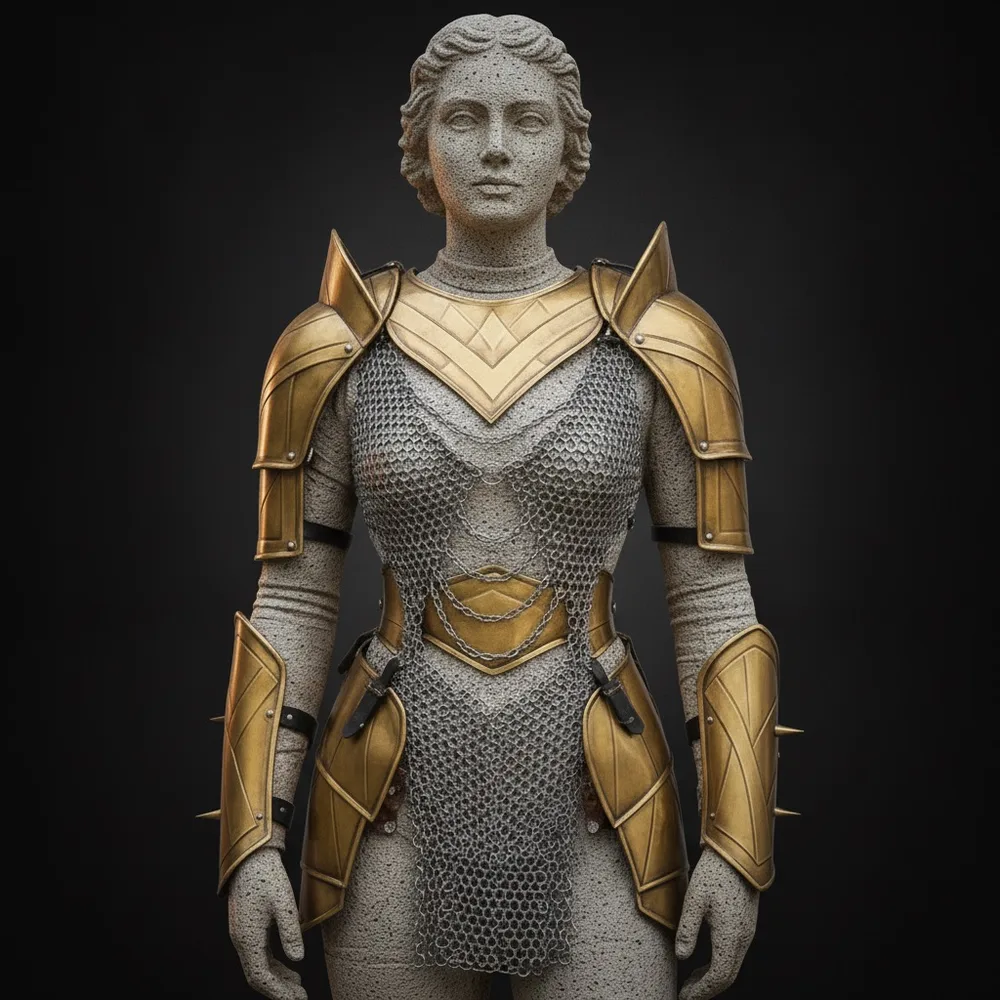
Catalogue reference: VaultX 061. Listed material: Steel/Chainmail.
Check the current product page and ask for model-specific dimensions, packaging and suitability before ordering.
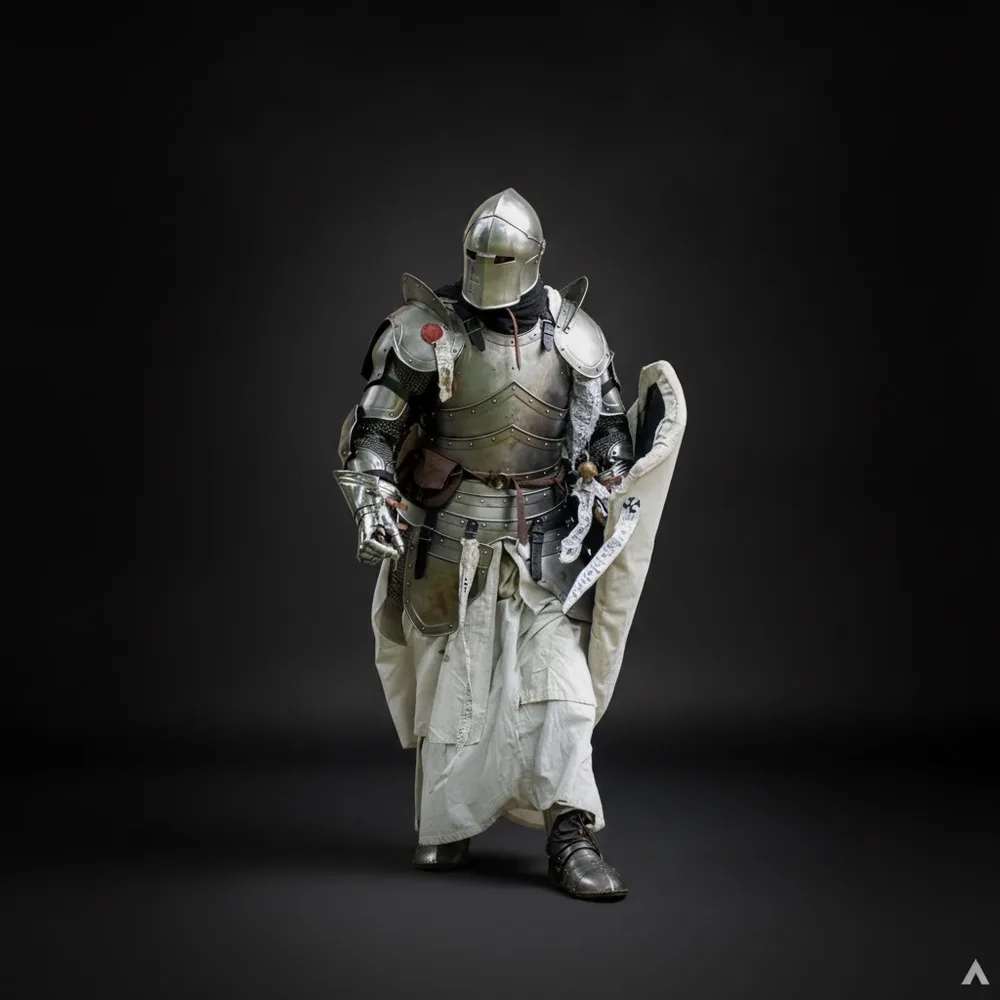
Catalogue reference: VaultX 011. Listed material: Steel.
Check the current product page and ask for model-specific dimensions, packaging and suitability before ordering.
Explore Antiqula’s armor suits catalogue
Catalogue examples were checked against Antiqula’s product records on 2026-10-02. Research sources provide context; they do not certify the performance of individual catalogue products.