Miniature vs Full-Size Diving Helmet Replicas: Planning a Display
Use viewing distance, furniture dimensions and handling needs to choose the right scale for a decorative diving helmet.
Plan scale, support and interpretation when selecting miniature or larger diving helmet reproductions for an interior or retail display.
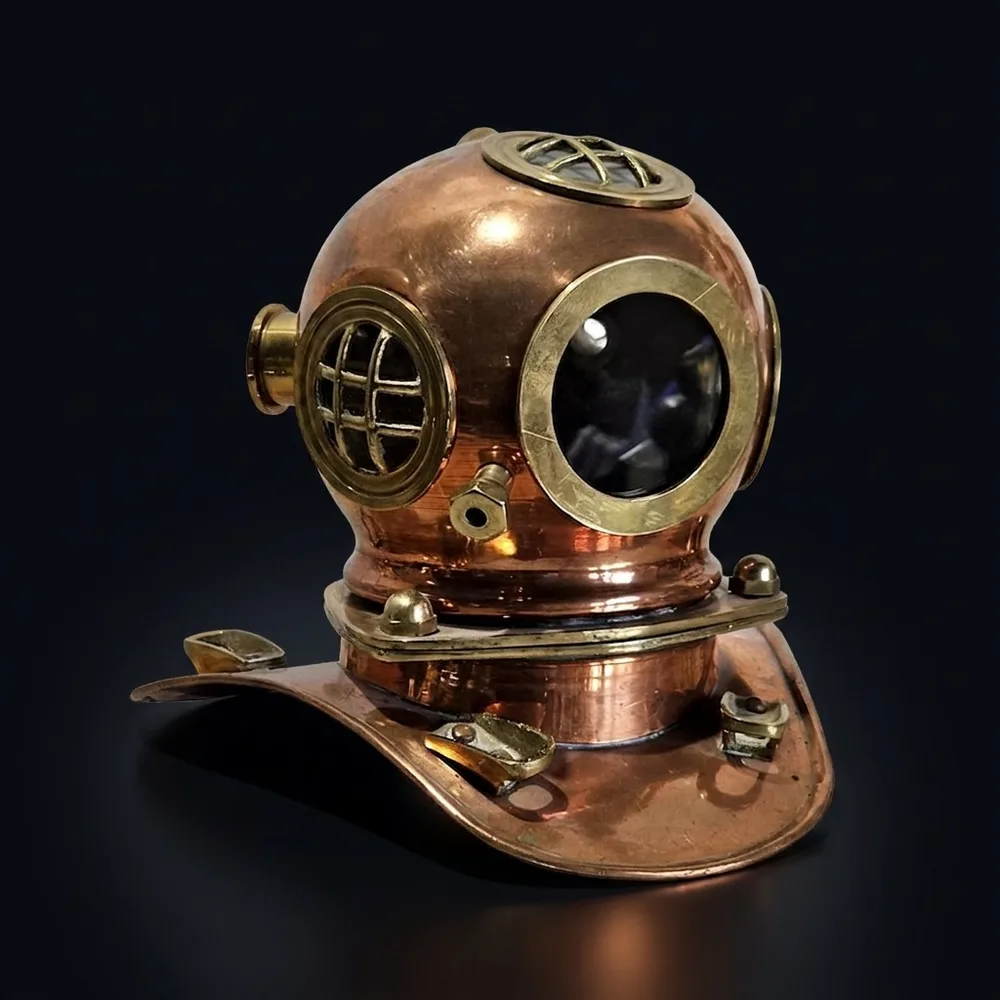
A diving helmet has an immediately recognisable maritime silhouette: a rounded upper form, windows and projecting fittings. As a reproduction, it can anchor a study, shop window or hospitality display. Its appeal is visual and historical. It must not be presented as equipment for underwater use, breathing or protection.
Antiqula’s catalogue distinguishes miniature and full-size display forms. That gives buyers a useful starting point, but size labels still need measurements. A miniature may suit a shelf arrangement; a larger form can dominate a console or room corner. Choose the scale in relation to its surroundings rather than treating the larger object as automatically more effective.
Start by identifying where the helmet will be seen from. A shelf object viewed at arm’s length needs a different relationship to its background from a statement piece seen across a lobby. Decide whether viewers will walk around it, see only the front or look down onto it from above.
In a maritime arrangement, a helmet can be the main object rather than one among many competing props. Give its windows and outline enough visual space to read clearly. A crowded group of ropes, maps, lamps and instruments may weaken that silhouette. Select a small number of supporting objects with a clear relationship to the story you want to tell.
| Display situation | Useful starting format | Measurement to request |
|---|---|---|
| Narrow shelf | Miniature | Total width including projecting fittings |
| Desk or sideboard | Miniature on a confirmed base | Height, base footprint and weight |
| Large console | Larger display form | Overall dimensions and support requirements |
| Public interior | Form appropriate to viewing distance | Weight, stability and handling guidance |
Full-size is a descriptive label, not a verified dimension or historical equivalence. Ask for overall height, width and depth for the chosen reference. Include fittings that extend beyond the rounded body. The visible shape can occupy more room than the support beneath it.
Some catalogue examples include a wooden base; others are shown without one. Confirm the arrangement for the specific reference. A base affects height, footprint and the object’s relationship to the furniture. It may also influence how the piece is moved and supported.
Do not assume that a decorative stand is designed for public handling, vibration or installation in a busy space. Ask how the helmet is attached, whether the base is removable and which parts should be held when moving it. Projecting fittings and window surrounds should not be treated as carrying handles without explicit guidance.
For a public display, the final placement may need a competent assessment of the furniture and stability. A replica that appears secure in a studio photograph has not thereby been verified for a hotel lobby or a visitor-accessible plinth. Consider access, accidental contact and the route used to deliver it to its position.
A copper-coloured finish is not the same as an object made entirely from copper. Antiqula’s miniature examples include copper-plated descriptions, so keep plating and underlying construction distinct in labels and briefs. Aged-looking finishes are contemporary surface treatments unless provenance establishes otherwise.
Request close photographs of the intended finish, especially where a group of items will be displayed together. Polished surfaces reflect the room strongly; darker finishes may emphasise the shape more quietly. Lighting, background colour and nearby windows can change the impression substantially.
Avoid using genuine antique as a casual synonym for vintage style. A reproduction can be attractive and carefully made while remaining a reproduction. Clear naming protects the visitor’s understanding and makes the display interpretation more credible.
A good caption identifies the object as a contemporary decorative replica inspired by historic diving equipment. It can point out visible elements, such as windows and the rounded shell, without assigning an exact date, navy or manufacturer from appearance alone.
If you want to connect a model to a specific historical design, research that design using a museum collection or another authoritative source and compare identifiable features. Do not assume that every brass-and-copper helmet reproduces the same historical pattern. General maritime styling and documented historical replication are different descriptions.
Use lighting to reveal the windows and outline rather than creating a harsh patch of reflected glare. A pale or dark plain background can help the silhouette, depending on the finish. Try the display from the likely visitor’s eye level and from the room entrance.
If touching is not intended, the arrangement should make that clear without relying on a fragile barrier of other objects. In a shop, staff can demonstrate a smaller piece while keeping a larger display protected. Avoid presenting the replica in a way that invites someone to wear it or test its fittings as functional breathing equipment.
Packed dimensions and unpacking instructions are especially useful for larger forms. Ask how protruding parts, windows and the base are protected. Check that the delivery route can accommodate the package and that the final furniture is ready before unpacking.
For maintenance, begin with the exact finish and supplier instructions. The Canadian Conservation Institute cautions that abrasive polishing removes material and can alter detail. A plated or deliberately aged finish should not be treated as unfinished solid metal. Keep a simple record of the recommended care method for staff who may clean the display later.
Include the intended location, viewing distance, available space, preferred scale and whether visitors will handle the piece. Add the product reference, confirmed base arrangement, material description and packed dimensions. Keep historical interpretation and safety limits in the same brief so they survive the handover to the person installing the display.
A successful maritime display depends on proportion and explanation as much as the object itself. Choose the helmet that sits convincingly in the space, support it appropriately and describe it honestly. The result can be memorable without pretending that a decorative reproduction is operational diving equipment.
Catalogue reference: ShoreX 8.0. Listed material: Brass & Copper.
Check the current product page and ask for model-specific dimensions, packaging and suitability before ordering.
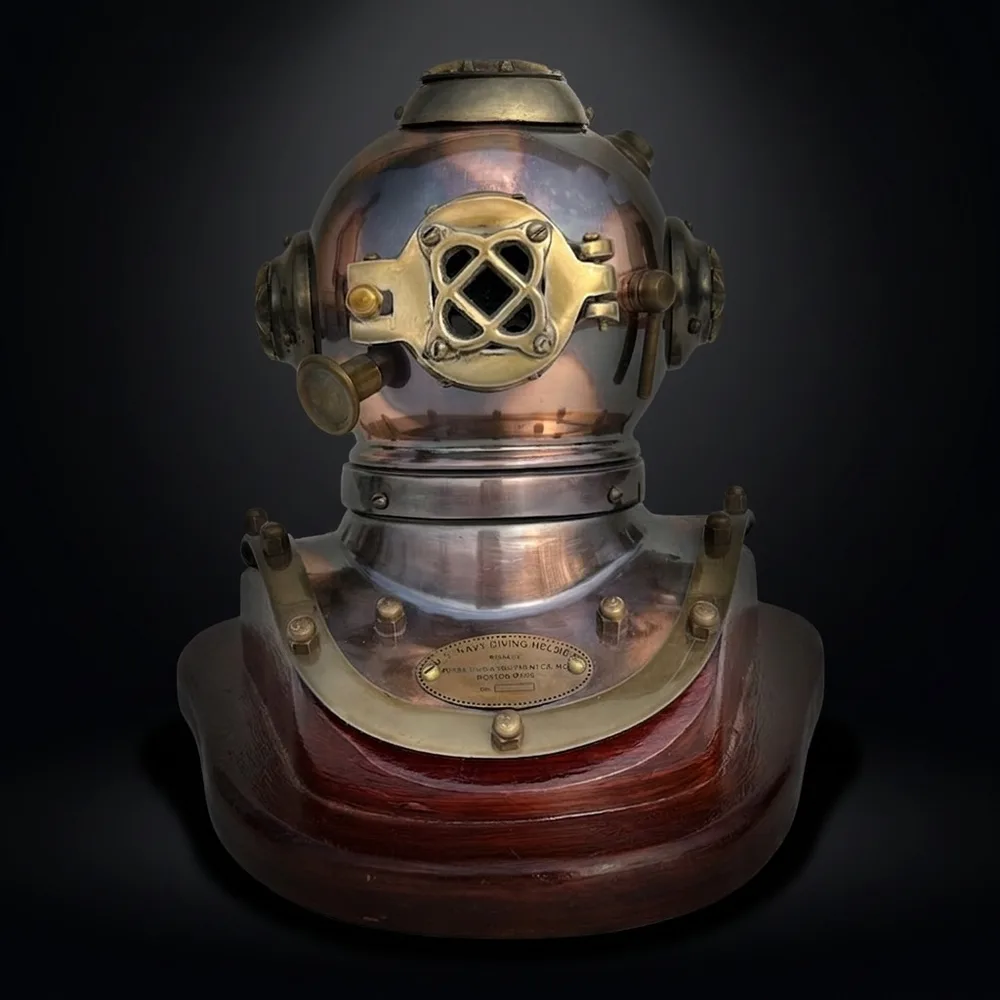
Catalogue reference: ShoreX 8.1. Listed material: Steel & Aluminum.
Check the current product page and ask for model-specific dimensions, packaging and suitability before ordering.
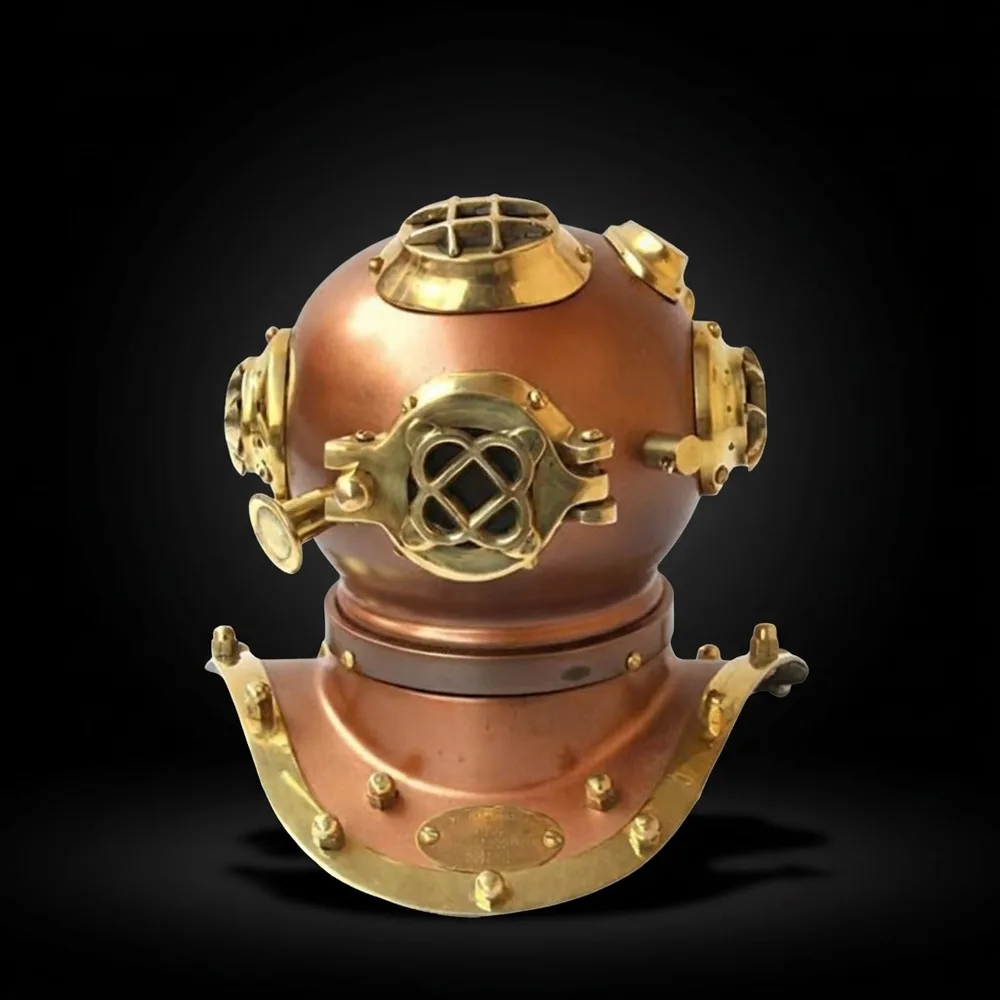
Catalogue reference: ShoreX 8.2. Listed material: Steel & Aluminum.
Check the current product page and ask for model-specific dimensions, packaging and suitability before ordering.
Explore Antiqula’s diving helmets catalogue
Catalogue examples were checked against Antiqula’s product records on 2026-10-02. Research sources provide context; they do not certify the performance of individual catalogue products.