Tripod Searchlight Styling: Height, Footprint and Room Layout
Plan where a tripod searchlight will stand by measuring the complete lamp, its leg spread and the surrounding sightlines.
Choose a tripod searchlight by room scale, finish, placement and the lighting role it should play in a maritime or industrial interior.
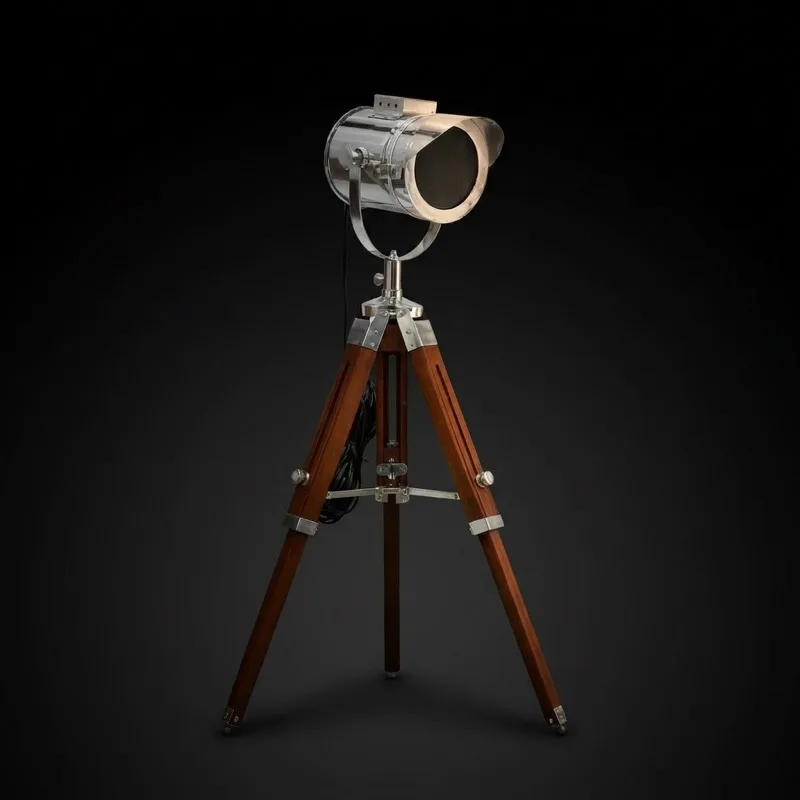
A tripod searchlight brings together a focused metal head, a three-legged support and a strong association with maritime, studio and industrial settings. In an interior it can serve as a reading light, a visual anchor beside a seating area or a prop that signals a particular mood. The choice is partly practical and partly compositional: height, footprint, finish and the beam’s direction determine how the object relates to a room.
Treat the catalogue as a range of contemporary decorative lighting inspired by familiar searchlight forms. A period-looking finish does not establish the object’s age or historical provenance. Likewise, the product’s decorative reference should not be used to claim it is a certified marine signal lamp or suitable for navigation or emergency use.
First decide where the light will sit and what it needs to do. A compact tabletop model may be appropriate on a broad console, studio desk or retail counter. A taller tripod can establish a vertical line beside a chair or in an open showroom. The same head can feel restrained at floor-lamp scale and crowded on a small table, so take measurements of the complete assembled piece rather than judging from the head alone.
| Placement | Useful starting point | Measure before selection |
|---|---|---|
| Desk or counter | Tabletop height | Height above the surface, tripod spread, nearby work area |
| Console or sideboard | Mid-size tripod | Full height, leg footprint, clearance behind the head |
| Seating corner | Taller floor format | Reach, stability, cord route and walking clearance |
| Retail or hospitality display | Scale to viewing distance | Sightline, glare, access and whether the lamp is switched on |
A few records illustrate the range without implying that every listing shares the same construction. FlareX 22.0 (flarex-22-0) is specified at 22 inches, with a chrome head and natural wooden tripod; its listed E27 bulb is not included. FlareX 25.0 (flarex-25-0) is a 25-inch tabletop option with a brass-and-wood material listing and warm antique head finish. FlareX 45.0 (flarex-45-0) is listed at 45 inches with a polished chrome head and natural wood tripod. These are useful comparisons of scale and surface, not claims that the models are otherwise identical.
The tripod changes the character as much as the head. Natural wood introduces warmth and visible grain; a black or white painted support creates a clearer graphic contrast; polished chrome reflects its surroundings; an antique-style head reads warmer and quieter. Think about adjacent materials, wall colour and the light already in the space. A reflective head beside a large window may pick up strong highlights, while a darker room may make a black support recede.
Photographs help compare the overall outline, but request the angles that resolve details important to your placement: front, side, rear, head joint, tripod feet and any switch or cord. If the lamp will be used for task lighting, check the actual range of head movement and the bulb specification for the specific reference. Do not infer electrical ratings, voltage, dimming capability, bulb compatibility beyond the stated specification or certification from appearance or a generic category label.
Tripod legs need a clear area on the floor or furniture. Measure the footprint with legs opened as supplied and consider whether their position will intrude into a walkway, catch a bag or sit close to a table edge. A tall head may look visually balanced while the feet are poorly placed for the room. If the product’s listing does not provide footprint or weight, request those details before fixing a location.
For a display in a shop or hotel, map the route from unpacking point to final placement. Confirm the package dimensions and whether the tripod folds or requires assembly only from the applicable product record. Keep the object away from door swings and routine cleaning paths. For public areas, have the venue’s responsible person assess stability, access and electrical installation requirements.
A searchlight can be selected for useful light, for its sculptural presence or for both. The distinction affects positioning. For reading, check whether the head can direct light to the page without shining into the user’s eyes or reflecting sharply from a screen. For a decorative focal point, the silhouette and finish may matter more than illumination; a low-output bulb or leaving it switched off may serve the intended effect, subject to the product’s instructions.
Avoid aiming a bright beam across visitor sightlines or toward reflective artwork. Test the position at the time of day when the room is used. Photographing the lamp with its light on and off can also help a buyer or merchandising team assess glare, contrast and how much visual space the head occupies.
For wholesale assortment planning, compare variation with a clear purpose. A compact chrome model and a taller brass-finish version could show two distinct combinations of scale and material language. Multiple near-identical heights can be harder for a customer to distinguish unless the differences in tripod colour, head finish or intended placement are made visible in the display and product information.
Use product-level facts in shelf labels: listed height, material wording, finish description, bulb inclusion and any documented stand detail. Do not substitute a category subtitle for a model specification. Keep price, minimum order, lead time and delivery terms tied to current buyer information; this guide makes no commercial promise about them.
Follow the supplier’s instructions for the specific finish. Dust with a soft, clean cloth and avoid abrasive polishing unless the maker confirms that it is appropriate. The Canadian Conservation Institute explains that metal objects can be vulnerable to corrosion and that care should take account of the object and its surface. Its collection-care guidance is a useful general reference, not a product-specific maintenance direction.
When moving a tripod lamp, support the head and stand at suitable structural points rather than pulling on a cord, shade edge or adjustment fitting. If the lamp is wired, unplug it before cleaning or repositioning and use a qualified electrician for any repair or installation question. Do not clean with liquid until the maker has confirmed which surfaces and finishes can tolerate it.
Before choosing a model, record the room, viewing distance, intended lighting role, maximum height and available footprint. Confirm the exact finish, material wording, supplied parts, bulb details, cord arrangement, assembled dimensions and care advice against that product’s listing or supplier information. For a commercial display, include sightlines, public access and placement review in the brief.
The strongest choice is the one that fits the room and has a clearly understood role. A measured footprint, appropriate head direction and accurate description will do more for the result than relying on a dramatic name or assuming that every tripod searchlight is built to the same specification.
Catalogue reference: FlareX 22.0. Listed material: Chrome & Wood.
Check the current product page and ask for model-specific dimensions, packaging and suitability before ordering.
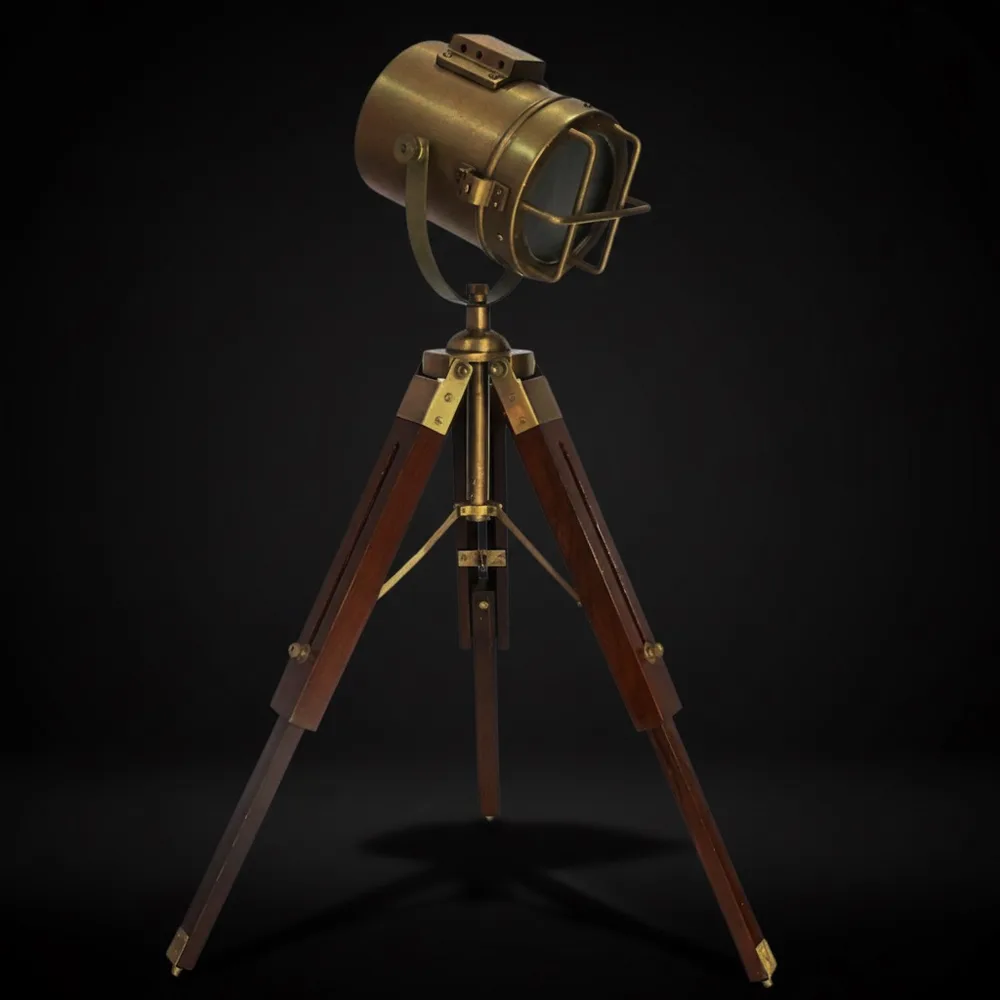
Catalogue reference: FlareX 25.1. Listed material: Brass & Wood.
Check the current product page and ask for model-specific dimensions, packaging and suitability before ordering.
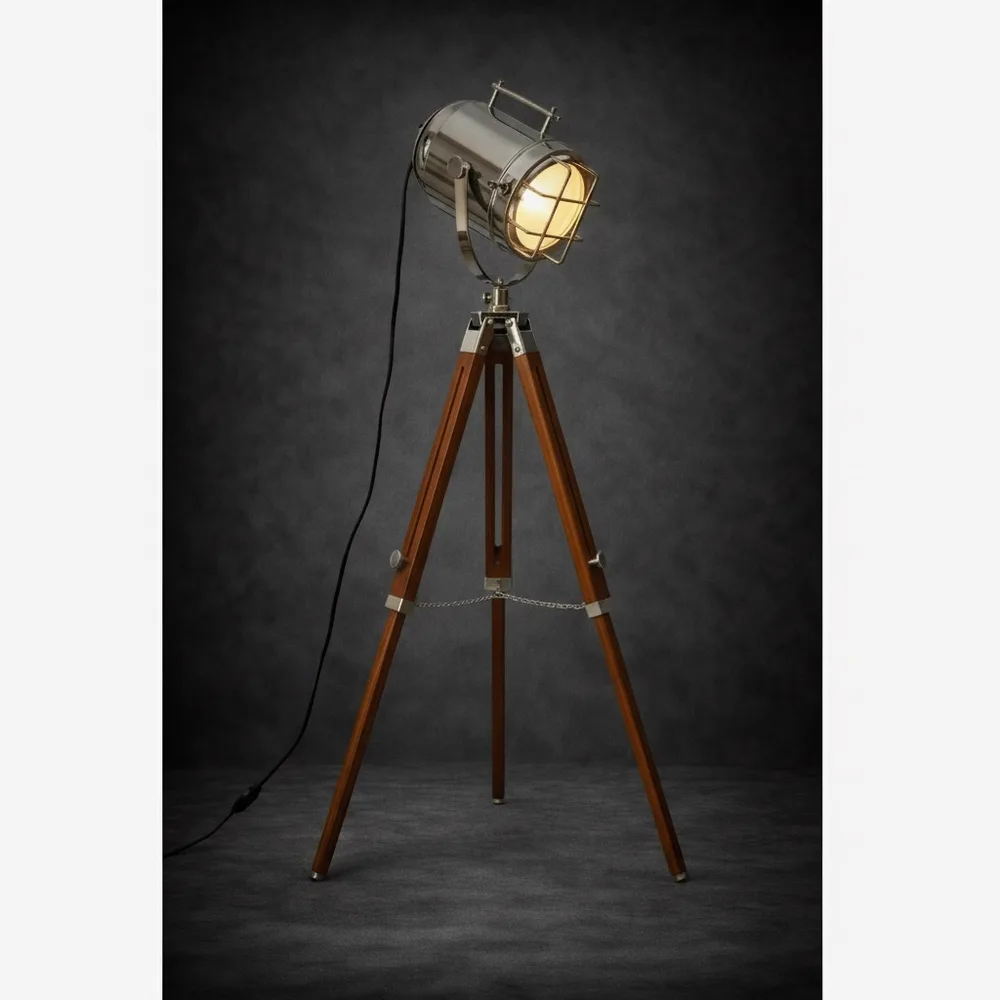
Catalogue reference: FlareX 45.0. Listed material: Chrome & Wood.
Check the current product page and ask for model-specific dimensions, packaging and suitability before ordering.
Explore Antiqula’s search lights catalogue
Catalogue examples were checked against Antiqula’s product records on 2026-10-02. Research sources provide context; they do not certify the performance of individual catalogue products.