Search Lights: Selection, Uses and Display Guide
Choose a tripod searchlight by room scale, finish, placement and the lighting role it should play in a maritime or industrial interior.
Plan where a tripod searchlight will stand by measuring the complete lamp, its leg spread and the surrounding sightlines.
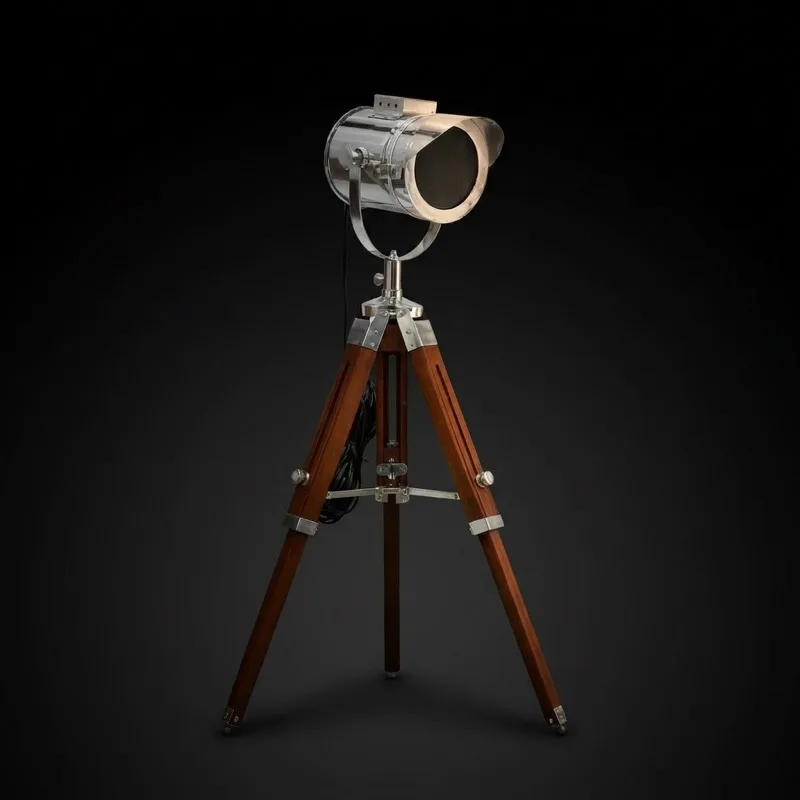
A tripod searchlight needs more room than its central pole suggests. Its head extends forward, its legs occupy a triangle or similar spread, and its overall height changes how it reads beside furniture. A quick floor plan can reveal whether it belongs beside a chair, behind a console or on a broad counter before a delivery arrives.
Record assembled height, maximum leg spread and the head’s front-to-back projection. For a tabletop model, also include the amount of usable surface lost to the tripod feet. Leave enough margin from the edge that a casual brush or bag cannot knock it over. If the listing gives only height, ask for a photo with a scale reference and the assembled footprint for the exact model.
The catalogue gives a useful height comparison: FlareX 22.0 (flarex-22-0) is listed at 22 inches, while FlareX 45.0 (flarex-45-0) is 45 inches. Their tripods are both described as wooden, but height alone does not tell you leg spread, weight or head projection. Confirm those details instead of extrapolating from the product name.
Draw the furniture, lamp footprint and normal walking route. Keep the tripod feet outside door arcs, chair pull-back space and the path used by staff carrying trays or stock. If the head aims toward a sofa or desk, mark the light direction as well. A lamp can physically fit and still send glare into a seated person’s normal view.
| Room position | Check before placement |
|---|---|
| Beside a chair | Reading reach, arm clearance, light aimed away from eyes |
| Behind a console | Wall clearance, cord route, visibility of tripod feet |
| Shop window | Sightline from outside, reflections, stability near glass |
| Desk or counter | Surface area consumed, nearby objects, edge clearance |
For a public-facing room, ask the venue’s responsible person to assess stability and access. Do not rely on a product photograph as an installation drawing. If a lamp will be switched on, check the actual product instructions for bulb and electrical details; a category description does not establish voltage or certification.
A tabletop lamp should have enough presence to be seen without hiding signage or work surfaces. A floor model can rise above a chair’s arm and create a vertical focal point, but it should not overpower a low ceiling or block artwork. Use masking tape or a cardboard outline to mark the proposed head and leg positions at full scale. This simple mock-up helps a team compare locations from the doorway and the seat.
A polished chrome head can reflect windows, artwork and bright fixtures. A warm antique-style brass head may blend with wood and leather, while a painted tripod can either recede or add a deliberate accent. Review the lamp in both daylight and evening lighting; a finish that looks quiet in a catalogue image may become a bright highlight under spotlights.
Record how the lamp is moved, where it is unplugged and who may adjust its head. Support the structure during repositioning and keep hands away from the cord and hot bulb. Dust gently and use only the care method approved for the exact finish. Leave access to the plug and switch without crossing a walkway.
A good layout gives the lamp room to function and to be understood. The measured footprint, safe route and controlled beam make the final placement feel intentional rather than improvised.
A tripod footprint is only half the placement problem. The searchlight head extends beyond the central column, and its direction can intersect a doorway, wall art or a seated person’s line of sight. Mark both the feet and the head projection on your sketch. If the head angle can be adjusted, test the intended range without forcing a joint, then note a preferred position for staff.
A reflective head also changes the surrounding layout. Chrome can mirror bright windows and point sources, so check it from several positions rather than only from directly in front. A brass-toned head creates a warmer accent but still benefits from a quick glare check under the installed lighting. For a room with a screen or glossy artwork, move the lamp until its reflections fall outside normal viewing angles.
Before delivery, identify who will unpack the lamp and where its packaging can be opened safely. Keep the assembly instructions and small fittings together. If the tripod requires assembly, position the feet on a clear surface before attaching or adjusting the head, following the supplier’s directions. Confirm the cord can reach the approved outlet without crossing the walkway or being trapped under furniture.
Where children, guests or customers can touch the lamp, consider how it is separated from traffic and whether its location invites someone to pull a leg or adjust the head. The venue should decide whether the lamp is decorative or intended to provide light and arrange any electrical installation accordingly. A bulb specification alone does not verify the safety of a particular room setup.
Catalogue reference: FlareX 22.0. Listed material: Chrome & Wood.
Check the current product page and ask for model-specific dimensions, packaging and suitability before ordering.
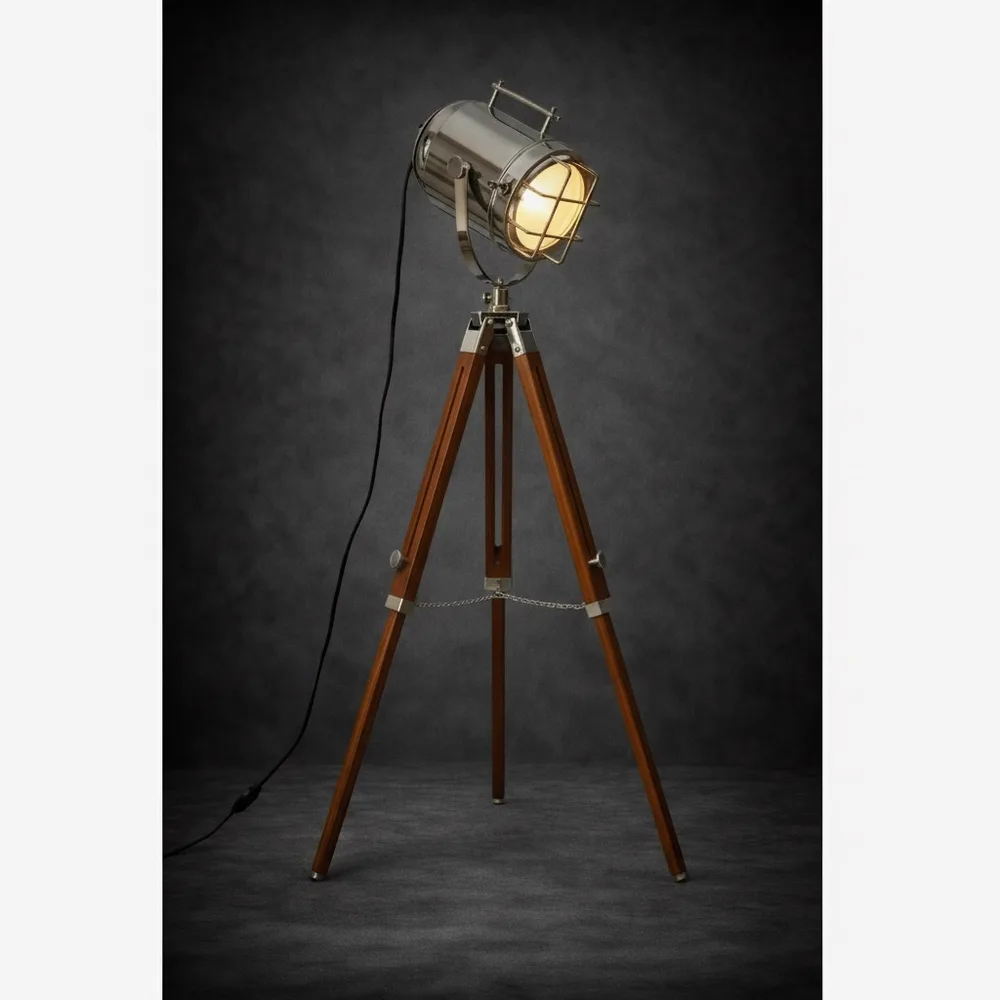
Catalogue reference: FlareX 45.0. Listed material: Chrome & Wood.
Check the current product page and ask for model-specific dimensions, packaging and suitability before ordering.
Explore Antiqula’s search lights catalogue
Catalogue examples were checked against Antiqula’s product records on 2026-10-02. Research sources provide context; they do not certify the performance of individual catalogue products.